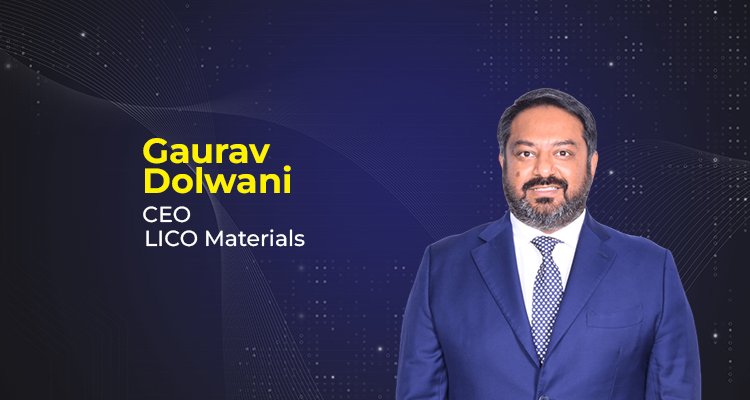
What is LICO bringing to The Battery Show India today, and which part of your offering do you most want automakers and battery makers to know about?
LICO works as a solution provider for end-of-life lithium-ion batteries. We do this through two verticals: recycling and repurposing. What we are showcasing at the show today are our repurposed products.
These batteries are made from cells or modules recovered from electric vehicles that have reached the end of their life. We are able to extend their life by five years by putting them into a battery energy storage system.
A large share of India’s battery waste still flows through informal collectors and scrap dealers. How is LICO working with this segment, and what will it take to move more batteries into formal, safe recycling channels?
Yes, that’s the reality. Almost everything moves into the informal sector, and the major reason for that is the 18% GST on batteries.
We have repeatedly requested a reduction in GST to 5%, along with a reverse charge mechanism. Lately, we have heard some good news on the e-waste side, and we hope this can be extended to batteries.
I think that will make a big difference, because the informal sector really plays on that 18% since they never pay GST. The moment it comes down to 5%, they will no longer have those margins, and batteries will become more formalised.
What policy changes would most help India build a strong battery recycling ecosystem, whether on recycled-content mandates, collection targets or incentives for recovered materials?
Collection is a very important part. However, I don’t think it needs to be incentivised, because incentivising collection may actually make the informal sector even stronger. There has to be accountability for batteries.
Today, batteries are going into the informal sector because some OEMs are dumping them there for a few rupees more. There are also recyclers who buy batteries and simply trade them into the informal sector in the name of recycling. That is why there has to be accountability, and a Battery Aadhaar or battery passport is important.
We can have all the rules in the world, but without implementation, there will still be a major gap. That’s what we see with the Battery Waste Management Rules and the implementation of EPR. The intent is always good and in the right direction, but somewhere along the way during implementation, we lose sight of why these rules were built. That’s where we are lacking as a country.
LICO highlights zero discharge and no harmful emissions in its process. How does recycling compare with mining in terms of water use and carbon emissions, and how do you help clients quantify this for their ESG reporting?
We have prepared some reports ourselves, which we are happy to share with you. Traditional mining methods use a lot of water and emit a lot of carbon. They also endanger lives, because many people who work in mines spend years underground in very harsh conditions.
Most of these mines are in Africa, where there is enough evidence that even young children are working in them, and the long-term effects on their lungs, heart and overall health are there for everyone to see.
What we call recycling can also be termed urban mining, because the same minerals are available in our batteries right here in our cities. We don’t have to go to mines. If we can recover them without any polluting methods, that would be the preferred way.
However, I think the overall demand for battery materials cannot be met 100% through recycling. But we can definitely look at setting targets of 20%, 30% and 40% over time, and reduce our dependence on traditional mining, which most definitely causes more pollution than urban mining. That would be a great outcome.