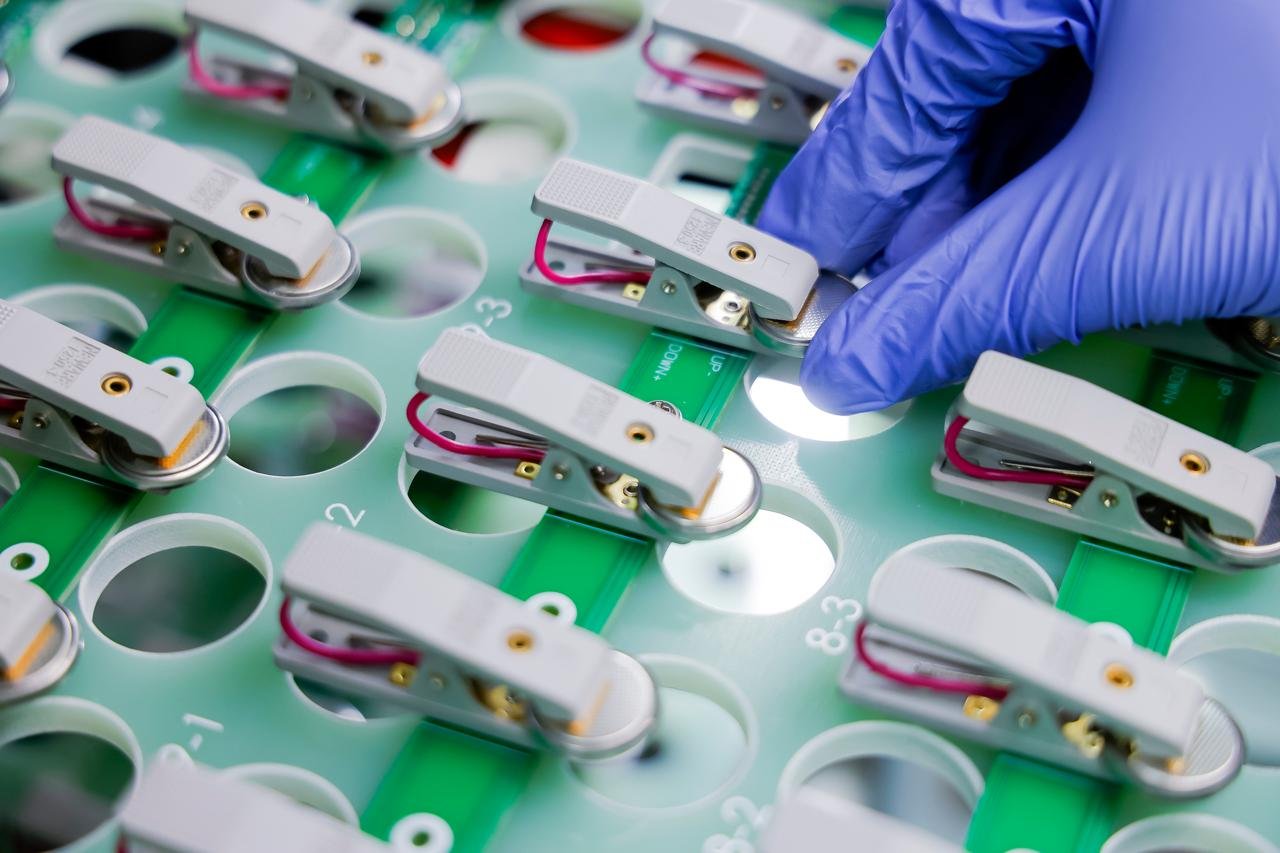
Epsilon Advanced Materials has launched Epsil, a silicon-graphite composite anode material developed to help battery manufacturers improve energy capacity without increasing battery pack size. The company projects that the material could increase electric vehicle driving range by up to 30 per cent. Alternatively, manufacturers could use smaller battery packs while maintaining existing vehicle range.
The actual range improvement will depend on factors including cell chemistry, silicon loading, electrode and pack design, and vehicle performance.
Epsil has a reversible capacity of 600–650 mAh/g, compared with 340–360 mAh/g for conventional graphite anodes. The silicon-blended graphite material is designed to improve cell-level energy density while addressing cycle-life challenges associated with the expansion and contraction of silicon during charging and discharging.
The material is also designed to support charging rates of 1C–5C while controlling expansion and maintaining uniform silicon dispersion in the anode. Epsilon has engineered the composite to reduce the risk of lithium plating during high-rate charging and the associated possibility of dendrite formation. The performance of Epsil on these measures will depend on cell design, temperature, charging protocols and validation in individual customer cells.
Vikram Handa, Managing Director of Epsilon Advanced Materials, said, “Battery manufacturers are being asked to deliver more range and faster charging without making battery packs larger. With Epsil, we are delivering higher anode capacity, stable fast charging and compatibility with existing manufacturing lines. Our aim is to give customers more flexibility in how they design for vehicle range and pack size, through a resilient & secure anode material supply option from India.”
The launch comes amid growing demand for EV batteries. More than 20 million electric cars were sold globally in 2025, according to the International Energy Agency (IEA). Global EV battery deployment reached 1.2 TWh during the year, and the IEA expects it to approach 3 TWh by 2030.
Send news announcements/press releases to:
jeevika@thefoundermedia.in